Unlock liquidity, transparency, and global market access by transforming real-world assets into secure, blockchain-based digital tokens.
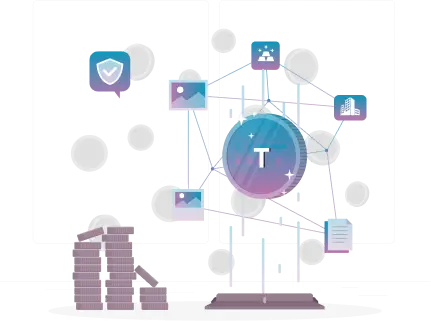
Talk to Our ExpertsAsset tokenization converts physical or financial assets into blockchain-based tokens representing ownership or value. Leveraging smart contracts, tokens can be securely issued, transferred, and traded, enabling fractional ownership, improved liquidity, and reduced intermediaries.
We provide a modular, highly secure suite of components for the asset tokenization ecosystem, fully compliant with KYC and AML standards, while ensuring scalability, seamless performance, and an exceptional user experience.
Platforms using MPC integration automatically protect private keys with distributed cryptography working to prevent single points of failure and reinforce custody security.
A centralized platform to create, control, distribute, monitor, and manage the lifecycle of digital asset offerings, with complete governance power for the issuer.
Combined compliance layer offering KYC, AML, investor accreditations, jurisdictional controls, audit trails and regulatory reporting for tokenization platforms
A regulated marketplace for global efficient, secure and transparent buying, selling, and secondary trading of tokenized real world assets between verified participants.
Main module handling the onboarding of new assets, the issuance of tokens, the distribution of tokens, the verification of asset backing, and the continuous regulation compliance throughout the lifecycle of the token.
System of record for ownership, transfer and restriction of tokenized securities, enabling compliant, transparent movement across networks.
A layer of tokenization blockchain infrastructure where a diverse set of decentralized validators network validate transactions, reach an agreement, be rewarded for securing and protecting the integrity of the network
An alternative trading system that allows for compliant secondary trading, providing liquidity, price discovery and access to fair markets for tokenized assets around the world.
The integration of multi-signature further improves security by requiring several mandated approvals prior to executing any transactions, significantly reducing the risks of fraud and theft.
An end-to-end breakdown of the legal, technical, and operational stages involved in issuing and managing blockchain-based securities.
This stage establishes the legal, financial, and operational aspects of the security token. The main decisions to make are ownership, compliance, investor eligibility, and jurisdiction. Deal structuring is foundational to any securities offering but, with blockchain, it is further optimized in terms of efficiency, transparency, and compliances of contemporary financial instruments.
The traditional way of digitization involves recording the asset data — previously stored in paper documents or spreadsheets — on the blockchain and embedding it (the asset data) into smart contracts. It is this stage where security tokens are issued, which represent a fraction of the asset, allowing for greater accessibility and liquidity of previously illiquid assets.
A primary distribution consists of the issuing of tokens to investors for capital. The digital register of members (ROM) will store investment information and ownership records about investors securely Export can take place via Security Token Offerings (STOs), ICOs, private placements, or immediate sales.
It deals with ongoing corporate actions such as dividend payouts, profit sharing, governance voting, and compliance reporting. Many of these processes are automated through smart contracts that enhance transparency, accuracy, and compliance while simplifying operations.
In secondary trading investors may sell and purchase security tokens after they have already been issued, unlocking real liquidity. Generally, trading can take place on regulated exchanges, ATS, OTC desks, or even P2P but is restricted by compliance and transfer limitations.
This stage ensures ongoing adherence to jurisdiction-specific securities laws and regulations. Automated reporting through smart contracts simplifies compliance audits, tax filings, and regulatory submissions, reducing risk and improving transparency.
Token standards for asset tokenization platform development define the structure, behavior, & functionality of tokens, enabling seamless integration & interaction within the tokenized asset ecosystem. Some of the most popular standards include:
ERC-20 is the breakout standard for fungible tokens on Ethereum, and allows users to create interoperable tokens for various kinds of assets such as securities, commodities, or even tokenized real estate.
ERC-1404 is an extension built on top of ERC-20 which allows transfer-restricting tokens to be built on top of it which is suitable for allowing compliant security token issuance based on regulatory and eligibility requirements from investors.
ERC-721 is a token standard for non-fungible tokens (NFTs) that represent unique and indivisible assets like digital art, collectibles, and real-world assets with unique ownership.
ERC-1155, another hybrid asset standard that supports both fungible and non-fungible assets, is most commonly used to represent in-game items, virtual real estate, and multi-asset ecosystems, such as those that might exist in a Metaverse.
ERC-3643 is an extensible token standard made for complete regulatory compliance, including transfer controls and issuance of equity, debt, and asset-backed tokens.
ERC-1462 is a non-fungible token standard on Ethereum enabling compliant issuance, management, and trading of tokenized financial instruments.
Everything you need to know about asset tokenization and development services.
“ Their emphasis on fostering a collaborative and inclusive work culture resonates deeply with me. ”
We're ready to support your success - explore what's possible.
Schedule a CallGet the latest insights, technology trends, and announcements. Stay ahead with our Blockchain and FinTech related updates.
Key Takeaways Crypto airdrops are strategic tools for user growth, decentralization, and governance—not just free tokens. Most valuable airdrops reward…
Key Takeaways A vast number of resources are invested in blockchain technology to not only enhance it but also to…
Key Takeaways An automated AI trading system allows you to automatically buy or sell crypto assets for trading. Machine learning…