Web3 Wallet Explained: Types, How It Works, Trends and Innovations


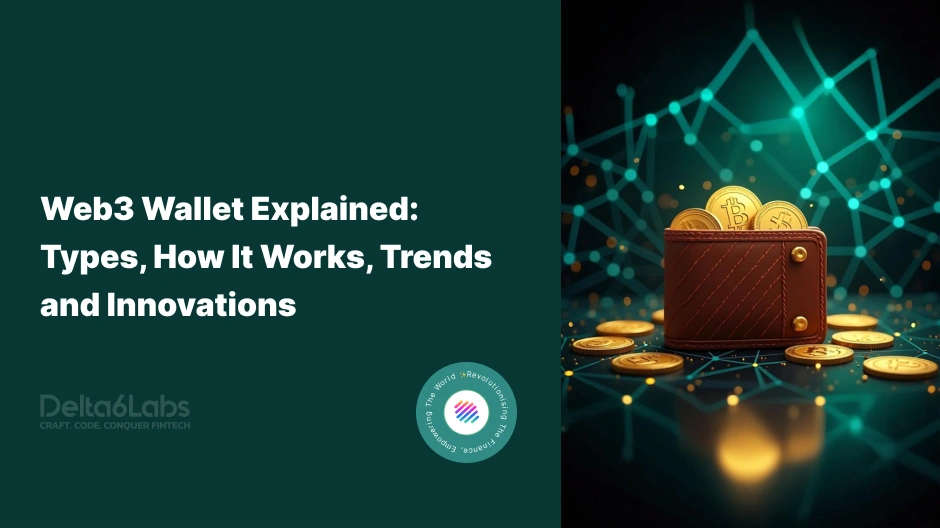
Table of Contents
Share
 Listen to the article and dive into a detailed exploration of the topic
4 min read
Key Takeaways
- Web3 wallets are more than crypto storage; they are digital identity and access gateways for the decentralized internet.
- They empower users to own and control their assets and data without intermediaries.
- Wallet types vary, including browser, mobile, hardware, smart-contract, and exchange wallets, each serving different needs.
- Web3 wallets enable access to DeFi, NFTs, blockchain gaming, DAOs, and decentralized identity.
- Security and responsibility shift to the user, making private key safety critical.
If you’ve been following crypto circles recently, you’ve probably noticed a phrase that gets thrown around casually: “Just connect your Web3 wallet.” It sounds simple enough, but for anyone stepping into the world of blockchain technology for the first time, the concept of a wallet that isn’t just for money can feel a bit strange.
Web3 wallets aren’t simply digital piggy banks. They are closer to digital key-rings, holding the keys that unlock your identity, assets, and access inside the decentralized internet. In fact, the name “wallet” doesn’t really do justice to what they are becoming. But it can be understood by the fact that their global market size was valued at $2.4 billion, and is forecasted to reach $18.9 billion by 2033, growing at a CAGR of 25.6%.
The Internet We Knew vs. The One We’re Entering
Think about how you use the internet today. You sign up for apps with an email, a password, and sometimes your phone number. Every platform owns a little piece of your identity, your data, and in many cases, your digital life.
Web2 works, but it comes with trade-offs: convenience in exchange for control. Web3 flips that logic. Instead of platforms owning your access, you own your key to the internet. No corporate gatekeepers. No “forgot password” buttons that lead to a support queue, and the tool that makes this possible is a Web 3.0 wallet.
What is a Web3 Wallet?
A Web3 wallet is a digital tool that lets you hold cryptocurrency, prove your identity on blockchain apps, store NFTs and digital collectibles, interact with decentralized apps (dApps), and sign transactions without intermediaries.
The keyword here is control. A Web3 wallet hands authority back to you. No bank manager, no government portal, no Silicon Valley platform pressing the approval stamp.
Types of Web3 Wallets
Web 3.0 wallets are of various types, classified according to their functionality:
Browser Wallets
These types of wallets are best-suited for beginners who do not have much understanding of crypto wallets. They can be added as web extensions to different browsers, including Chrome.
Mobile Wallets
Think of these as crypto-enabled banking apps on a phone, but the control stays with the users. These wallets are convenient for people who are mostly busy travelling and want to participate in cryptocurrency trading.
Hardware Wallets
These wallets are in the form of physical devices and are not connected to the internet. It is suitable for people who want to guard their assets like treasure in a vault. These wallets are the most effective ways of saving digital assets from online attacks and scams.
Smart-Contract Wallets
Smart-Contract wallets are highly advanced wallets with recovery options and programmable permissions. They bring modern UX to crypto security.
Exchange Wallets
Exchange wallets are convenient, but technically not “true Web3 wallets.” Users don’t control the private key; the platform does.
Why Web3 Wallets Matter?
The most common notion about Web 3 Wallets is that you can store coins and NFTs. But the real power lies deeper. Some of the core reasons behind the significance of Web3 wallets are:
Digital Identity
Your wallet can be your login credential across decentralized apps. No password resets are required. It also saves time by removing email verification loops. Web3 wallets are faster and foster privacy as they are completely under the control of the users.
Access to the Decentralized Economy
Everything in the decentralized space, including DeFi platforms, NFT markets, blockchain gaming, and DAOs, everything starts with a wallet. If you want to vote in a decentralized organization? Or collect an art that only exists online? Or verify a digital certificate? Your wallet is the key.
Freedom and Self-Custody
The shift from traditional finance to Web 3.0 changes everything, not just banking, but identity, ownership, and participation online.
Is Web3 Ready for Mainstream Adoption?
Web3 wallets still feel technical to this day and age. You need to know about recovery phrases, chain networks, gas fees, and signing requests. It takes some learning, similar to when computers first came out, similar to when mobile phones first came out. Do you recall your first time teaching someone how to use a smartphone? It felt like magic and chaos. This is where we are with Web3 wallets.
Here is the good news: The UX is developing fast.
Crypto is finally getting less hard, thanks to account-abstraction wallets, social recovery, and gas-abstracted experiences that make crypto feel more like regular fintech — as you can see in this entry from Matt: DST will make Web3 wallets even more seamless and as natural to use as taking your phone out when paying for a coffee at a cafe.
Safety Advice for using Web3.0 Wallet
The following will show how to protect your assets.
- Never give your private key or seed phrase to anyone.
- Store the additional funds on a hardware wallet and limit its exposure to scams.
- You also should take care of the fake links and phishing sites, which use many social engineering techniques to get users to trick.
- Double-check wallet addresses you want to send digital assets to.
- Enable biometrics wherever possible.
The Future of Web3 Wallets: Powered by WaaS
As Web3 reaches a broader audience, not everyone wants the pressure of memorizing seed phrases, juggling private keys, or setting up cold storage. This is where Wallet-as-a-Service (WaaS) steps in as a bridge between everyday users and the decentralized world.
Wallet-as-a-Service platforms offer ready-to-use, secure, and customizable wallet infrastructure so businesses can onboard users without friction. For end users, this means logging into a Web3 wallet the same way they log into Netflix or a banking app, with biometrics, social login, or a simple password, while advanced cryptography security runs quietly in the background.
In short, WaaS lets companies create wallet experiences that feel familiar, while still giving users blockchain-level ownership and functionality. It’s a major step toward making Web3 onboarding as intuitive as opening an email account, and it’s accelerating mainstream adoption faster than most people realize.
Keep Your Digital Assets Safe With Web3 Wallets
Delta6Labs specializes in the design and development of digital wallets for Web3 consumers and businesses to drive the future. From a multi-chain wallet or NFT wallet to a DeFi-focused wallet or enterprise-grade Wallet-as-a-Service (WaaS) infrastructure, we help you engage your users with a design-first approach and deep blockchain expertise. When you choose Delta6Labs, you are not merely adopting Web3; you are building decentralized experiences powered by technology that puts control in the users’ hands for the new era of Fintech.
Final Words
If you take away just one thing from this: A Web3 wallet isn’t a crypto app, it’s your identity, money, and digital life under your own control. Yes, it comes with responsibility and might feel confusing at first. But behind every new technology that changes the world, there’s a moment when most people hesitate, not because it doesn’t work, but because it’s unfamiliar.
Web3 wallets are that moment now, and one day, they won’t feel like “crypto tools.” They’ll feel like the internet always should have been, yours.
Frequently Asked Questions
Unlike traditional wallets or banking apps, a Web3 wallet does not rely on a central authority. Users own their funds and identity, and transactions are signed on-chain.
Web3 wallets are secure when used correctly, but safety depends on the user. Keeping private keys safe, avoiding phishing links, and enabling hardware security improve protection.
Some wallets support multiple networks (e.g., Ethereum, Polygon, BNB Chain), while others are chain-specific. Multi-chain wallet adoption is rapidly increasing.
Not always. Some wallets allow users to create accounts and explore before holding crypto. Many blockchain apps now cover or abstract gas fees for beginners as well.
Yes, Delta6Labs offers fully customized Web3 wallet development solutions tailored for DeFi protocols, NFT marketplaces, token ecosystems, and multi-chain blockchain applications.
Disclaimer:
The information on this blog is for knowledge purposes only. The content provided is subject to updates, completion, verification, and amendments, which may result in significant changes.
Nothing in this blog is intended to serve as legal, tax, securities, or investment advice of any investment or a solicitation for any product or service.
 Trending Topics