Key Takeaways
- NFT marketplaces allow anyone to tokenize what they make. Whether they are digital artists, musicians, or influencers, creators around the world can reach an audience without galleries or music labels as intermediaries
- An NFT marketplace is a digital marketplace where users can mint, purchase, sell, and trade NFTs, similar to crypto exchanges and traditional stock exchanges.
- The minting feature is one of the major characteristics of a winning NFT marketplace.
- Smart contracts power the core functionality of NFT marketplaces, including minting, royalties, auctions, and payments.
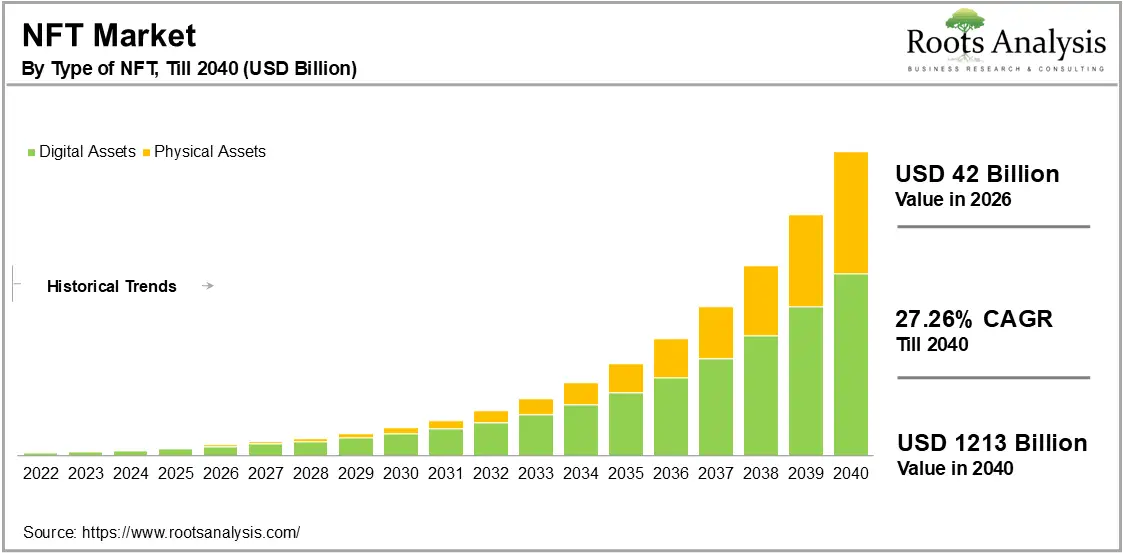
A revolution has truly hit the world of digital assets with the landing of NFTs. The NFT market has reached $42 billion in 2026, and is projected to reach 1213 billion by 2040, growing at a CAGR of 27.26%.
They are reshaping the meaning of ownership and value in several sectors, including art, music, real estate, and gaming. NFT marketplaces are at the core of this ecosystem, platforms where you can buy, sell, and trade these digital assets.
In very little time, NFT marketplaces have established themselves as some of the backbone contributors of our blockchain economy. Both of which offer creators new means of revenue, as well as new avenues for collectors and investors to enter the digital economy like never before. In this blog, we will discuss the importance of NFT marketplaces, advantages, key features, and how to create an NFT marketplace — a complete step-by-step guide.
What is An NFT Marketplace?
An NFT marketplace is a digital marketplace where users can mint, purchase, sell, and trade NFTs, similar to crypto exchanges and traditional stock exchanges.
NFTs — short for NON-FUNGIBLE TOKEN — are blockchain-based digital assets representing ownership of unique items such as digital artwork, collectibles, videos, music, or even in-game assets. Different from the ability to convert bitcoin or Ethereum to further bitcoin or Ethereum, an NFT is a unique blockchain token that cannot be replicated. That is where marketplaces help — they are the bridge between creators and buyers. NFT platforms facilitate creators from art, gaming, or brands to feature their works, while collectors can purchase safely and track their rights with the non-fungible tokens backing them.
Significance of NFT Marketplaces
These are critical as NFT marketplaces are the backbone of the NFT ecosystem and are much more than just a trading platform. They are necessary for the following reasons:
NFT marketplaces allow anyone to tokenize what they make. Whether they are digital artists, musicians, or influencers, creators around the world can reach an audience without galleries or music labels as intermediaries. NFT marketplaces use blockchain technology to provide transparency and lead to immutable ownership. Counterfeiting and fraud are virtually impossible because every transaction is recorded on the blockchain. NFT marketplaces have opened doors to new business models, including fractional ownership of NFTs: in-game assets that can correlate to real-world economic value, and passing royalty payments to the original creator each time their NFT is resold. With the expansion of the metaverse, NFT marketplaces will be the main hub for the trade of virtual goods like land parcels, avatars, and accessories. They are the economic base of these digital worlds.
Main Attributes of a Thriving NFT Marketplace
If we talk about an NFT marketplace, it has several main attributes, such as:
User-friendly Interface
An intuitive, simple, and well-structured design guarantees that users can browse, mint, buy, and sell NFTs without getting lost. A user-friendly interface is a great tool for a platform to keep its customers by offering them a user experience that they will never forget.
Minting Feature
The minting feature is one of the major characteristics of a winning NFT marketplace. Users should be able to create new NFTs directly from the platform without any technical difficulties. Minting components ought to include support for metadata, pricing, and royalty settings.
Multi-chain Compatibility
In the current DeFi environment, where technology keeps evolving, single-chain capability has become outdated. To be in the market, an NFT marketplace should be able to work with multiple blockchains such as Ethereum, Solana, and Polygon.
Smart Contract Integration
Smart contracts act as the infrastructure of any platform based on blockchain technology. They process transactions automatically, which helps to ensure that conditions such as royalties and payments are met securely without the need for a third party, thereby promoting transparency in NFT marketplaces.
Wallet Support
To allow users to store and transact with NFTs, NFT Marketplaces must integrate with secure digital wallets that are developed by Delta6Labs. The recent cases of theft of NFTs have made the integration of secure wallets necessary to protect users’ digital assets.
Advanced Security Features
AN NFT marketplace should incorporate multi-layered security features such as two-factor authentication, KYC/AML mechanisms, fraud detection tools, etc.
How to Create an NFT Marketplace?
Here is the step-by-step guide to creating an NFT marketplace:
Define the Niche of your Marketplace
Niche: The first step is to identify which niche you are going to serve with your NFT marketplace. Is it going to be a digital art, music, sports collectibles, gaming assets, or general-purpose marketplace? In a competitive cryptocurrency market, a niche approach can make your platform stand out.
Select a Blockchain
Different blockchains offer different trade-offs in terms of transaction fees, scalability, and security. Ethereum is undoubtedly the number one blockchain for NFTs, but alternatives, including Binance Smart Chain, Polygon, Flow, and Solana, compete with low fees and speedy transactions.
Create an Attractive UI Design
It is imperative to have a simple, intuitive, and responsive interface. It should be fairly easy for both creators and buyers to just browse collections and transact as users end up doing today. No technical barriers.
Integrate Secure Wallets
NFTs Wallet NFT Storage, Buy, and Sell Any NFT NFTs Wallet Integration Integrating with secure crypto wallets or peer-to-peer NFT specialized wallets can ensure digital asset security.
Incorporate Smart Contracts
The key features of NFT marketplaces, such as minting, royalties, auctions, and payments, are supported by smart contracts. The stable release should always be safe, transparent, TVG, and tested to shake off all vulnerabilities.
Add Core Features
Build in essential features like minting tools, search filters, ratings, auctions, etc. This enhances the user experience and site engagement, which in turn drives more traffic.
Ensure Platform Security
In all NFT marketplaces, security comes first. Security: The platform must be protected from hacks, fraud, and data breaches by utilizing encryption, regular audits, and secure coding practices.
Testing and Launch
Definitely test the platform for functionality, performance, and security before it goes live. Test something and then deploy the marketplace along with a marketing campaign to kickstart the user and creator base.
NFT marketplaces are here to stay, and the future is bright since adoption is growing in all sectors. The metaverse is here, from NFTs for exchange of digital real estate to fashion to gaming – finding more ways to settle in. The need for interoperability between chains with a single NFT having the ability to swap across multiple chains will also be a huge point. NFTs will also become more immersive when combined with AI and augmented reality, which would allow for the browsing and experiencing of NFT ownership.
NFTs are inherently decentralized, but if there are regulations, marketplaces (similar to ICOs) will need to adjust to comply. We will also witness the rise of greener blockchain alternatives catering to sustainability concerns.
Turn Your NFT Vision into Reality with Delta6Labs
NFT marketplace development is one of the core strengths of Delta6Labs, focused on designing secure, scalable platforms for NFT minting, trading, and management. Delta6Labs empowers businesses to launch customizable NFT ecosystems with high performance, advanced security, and seamless interoperability across multiple blockchain networks, all powered by robust smart contracts and user-centric design.
Build your own NFT Marketplace with us. Connect now.
Final Words
NFT marketplaces are leading the charge as crypto- and blockchain-based marketplaces that enable creators, collectors, and investors to interact in a decentralized economy. They are not just about buying and selling art; they are a paradigm shift in the thinking around ownership, value, and digital identity.
NFT marketplaces have reformed the method of trading digital assets because of the vast advantages for both ends, such as accessibility globally, transparency, and many other benefits, like royalties uplift for creators themselves arising from NFT marketplaces. Having wallet integration, minting tools, and smart contract capabilities, these platforms represent the pillars upon which the NFT ecosystem continues to grow.
There are huge opportunities for entrepreneurs and businesses in the NFT marketplace development. Anyone can take advantage of this growing market by simply defining a niche, picking the best blockchain, and utilizing security and ease of use. With NFTs getting more integrated with the metaverse and traditional industries, marketplaces will remain the center of innovation around them and the future of digital commerce.